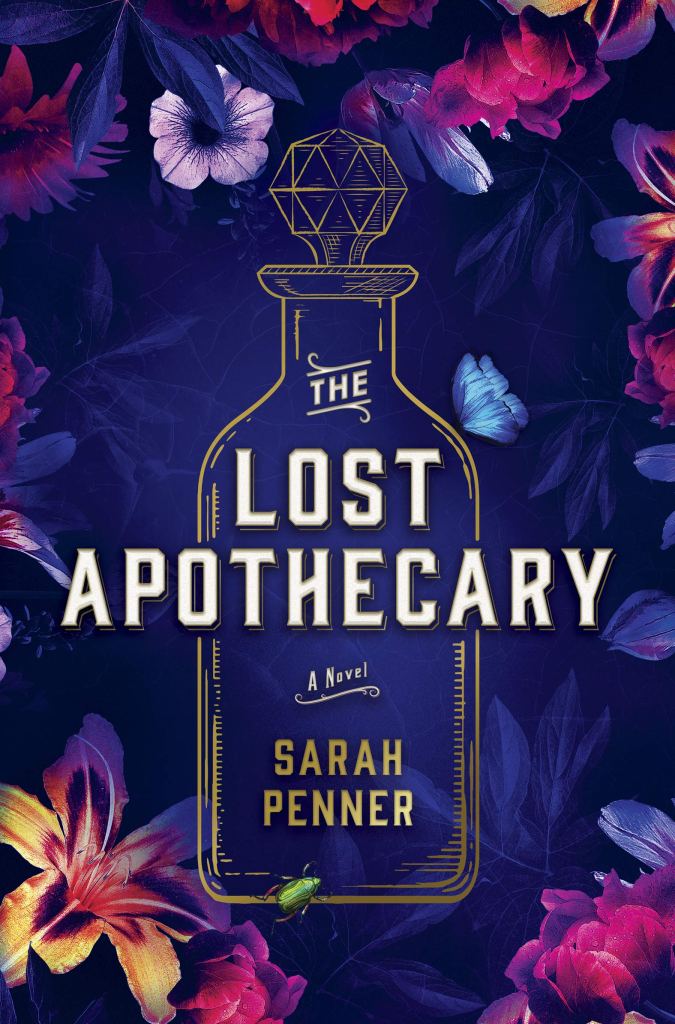
If you’re looking for a novel that is intelligently written, comes replete with fully-formed characters, features memorable locations, and passes the Bechdel Test, then look no further than Sarah Penner’s debut novel, The Lost Apothecary.
I think it’s well documented that I favor a novel with parallel narratives (see The Ex Talk and anything by Abby Jimenez), and The Lost Apothecary delivers three characters’ voices with a level of distinction that is admirable: Nella, Eliza, and Caroline are women who seek and ultimately find their strength. Beyond these parallel narratives, the novel is – at its heart – a mystery, and Penner gives the reader just enough information from each character’s perspective in order to compel the plot and deepen the intrigue.
While on holiday in London, attempting to rediscover who she is apart from her husband, Caroline finds a curious object during a mudlarking excursion (I had to look it up, too) that compels her to piece together the histories of Eliza and Nella, two individuals thrown together in an apothecary’s shop in 1791. Pieced together from etchings, records, and results from internet searches, Caroline slowly uncovers the two women’s lives, lives that would’ve otherwise remined buried. In the end, the discoveries reveal that each woman’s life has value, that each woman’s story – recorded for history to remember – deserves to be told. And that’s what Penner does so well; she crafts three memorable stories, pulling the reader in to the two worlds, both in present day and 1791; we see that, like the ebb and flow of the River Thames, women confront problems, yet through the help of others – even strangers – they overcome.
If you enjoyed Deborah Harkness’s Discovery of Witches, you’ll like The Lost Apothecary; both books feature strong, intelligent women who are unafraid to find the answers, even when those answers may raise more unsolved (unsolvable) mysteries.


 shelly. walston. writes.